Een nieuwe aflevering van Boeknotities. Dit keer nog eens een complotboek over 9/11 (geen schrik, ik heb er nog massa's liggen). Mark Gaffney concentreert zich in dit boek op de financiële kant van 9/11, een aspect dat op een misdadige manier onderbelicht werd door de 9/11 Commissie.
- De twee vliegtuigen die in de Twin Towers vlogen raakten allebei precies de vloeren die recent werden gerenoveerd (hetzelfde deed zich overigens bij het Pentagon voor AA77 crashed net in het enige gerenoveerd deel van het gigantisch gebouw - hoe toevallig):
The points of impact also reveal a remarkable coincidence: each aircraft struck precisely the bottom portion of the only sections of each tower recently upgraded (between 1995 and 2000) with thermal insulation, to guard against building fires. The renovation of the North Tower (struck by AA 11 at floors 94-96) involved floor 92 and above. Similarly, the renovation of the South Tower (struck by UAL 175 at floor 78-81) involved floor 77 and above. - De piloten vertoonden een onwaarschijnlijke hoge graad van expertise (ingegeven door Allah wellicht):
The Flight Data Recorders from the other two planes were recovered: American Airlines Flight 77 (AA 77), which hit the Pentagon, and United Airlines Flight 93 (UAL 93), which crashed in Pennsylvania. They indicate that in both cases the accused hijack pilots performed numerous complex autopilot mode changes.3 This has puzzled experts. Recently declassified 9/11 Commission records include interviews with United Airlines personnel who express skepticism that the accused hijack pilots could have performed flight operations involving this level of expertise. One said, “Entering changes to the autopilot is something that terrorist pilots probably would not have been trained or able to do. Even the United senior pilot who instructs on how to do that said that he always has to pause before he makes such corrections to make sure he remembered how to enter the change.” - Beslissing Clinton-administratie inzake GPS had grote impact:
As a result of this decision, made by President Clinton, the US military partially lifted the “intentional degradation” of the GPS signal, whereupon its accuracy increased by a factor of ten. This shift, 16 months before 9/11, had powerful ramifications for commercial airline navigation. Indeed, by the mid-1990s it had become evident that GPS was the navigation technology of the future. By this point, the FAA, assisted by companies such as Raytheon, was already making plans to eventually replace the older, more expensive ILS landing systems and VOR navigation systems with new augmented GPS signal service.
RNP “highway in the sky” routes provide for a containment accuracy within a virtual corridor, the dimensions of which are described in nautical miles. In 2003, Raytheon reported further improvement: the narrowing of WAAS-enabled corridors to just 3 feet (RNP 0.02). According to Raytheon, “WAAS … supports required navigation performance (RNP) operations, providing a precision navigation capability down to RNP 0.02 (an accuracy of 0.02nm),” In plain English, WAAS is capable of maintaining an air corridor accurate to within .02 of a nautical-mile 95% of the time.20 In GPS navigation, a “waypoint” is defined as a three-dimensional location within the National Air Space, comprised of longitude, latitude and altitude coordinates.21 RNP supported flight paths and runway approach procedures are comprised of a series of waypoints.22 Interestingly, the World Trade Center towers themselves are known to have occupied waypoint coordinates.
Aircraft Flight Management Systems (FMS) facilitate precision instrument approach procedures that involve the interception of waypoint coordinates.24 By substitution of WTC and Pentagon building waypoint coordinates for flight-leg terminating waypoint coordinates, a RNP-like waypoint intercept procedure under autopilot control could have accomplished the attacks on the Pentagon and WTC of September 11, 2001. - Andrea Mitchell, vrouw van Alan Greenspan, valt op tv, de journalist Gary Webb aan, terwijl Greenspan Wall Street dereguleert, met speciale gevolgen op 9/11:
One of the low points occurred on live TV on November 15, 1996, when NBC’s Andrea Mitchell, wife of Federal Reserve chairman Alan Greenspan, referred to Webb’s exhaustively documented expose as “a conspiracy theory,” the kiss of death for any serious journalist.7 At this same time, of course, Greenspan was busily (dare we say “conspiratorially”?) engineering the deregulation of Wall Street, setting the stage for the eventual financial meltdown of the global economy. As we will see, this deregulation may have also had a part in 9/11 itself. - Meer over Gary Webb (en zijn dood):
After the onset of the war in Afghanistan, the CIA’s support for Afghan drug lords moved out of the closet. By 2009, even the major US papers were reporting on it.8 However, the political climate of the 1990s simply would not allow an honest airing of the CIA-drug issue, much as a real investigation of 9/11 remains taboo, to this day. Webb’s newspaper publisher ultimately caved under pressure and threw his Pulitzer Prize-winning reporter under the bus, even as Webb was turning up fresh evidence that indicated he had, if anything, understated the case against the CIA.9 When CIA Inspector General Fred Hitz finally testified before the House Intelligence Committee, in March 1998, he admitted it was all true: “Let me be frank about what we are finding. There are instances where CIA did not, in an expeditious or consistent fashion, cut off relationships with individuals supporting the Contra program who were alleged to have engaged in drug trafficking activity.”
His body was discovered on December 10, 2004, along with a note and other evidence of suicide. Because Webb had been shot twice in the head—evidently not as rare in suicide as might be presumed—many skeptics continue to believe that he was murdered. But even if Webb died by his own tragic hand, and the evidence indicates he did, does that exonerate those who drove him to it? - Het Pentagon wordt net daar geraakt waar onderzoekers speuren naar de 2,3 biljoen die volgens Donald Rumsfeld verloren waren. Hij verklaarde dit op 10 september 2001!
9:38 a.m. on the morning after Rumsfeld’s press conference, the nascent investigation of the missing money was derailed even before it could get underway, when the west wing of the Pentagon exploded in flames and smoke, the target of a terrorist strike. And with the attack also died any remaining hope that the US military might still get its budgetary house in order. Curiously, the exact point of impact was the Department of Defense accounting offices on the first floor. The odds against this being a coincidence, given the Pentagon’s enormous size, prompted skeptics of the official story to read a dark design into the attack. The surgical destruction of the Department of Defense’s records and staff, nearly all of whom died in the rubble, leads to important questions about who benefited from 9/11. The answers suggest that Deep Throat’s famous dictum during the Watergate revelations—“follow the money”—may be no less important to a deep understanding of 9/11. - Die keuze was zeer merkwaardig te noemen in hoofde van terroristen:
Why did the terrorists not take the easy approach up the Potomac River? The river approach would have afforded a reasonably good chance to crash the offices of Secretary of Defense Rumsfeld and the Joint Chiefs of Staff, which were located on the opposite side of the building, in the middle of the outer “E” ring. The location of their offices was no secret. Surely terrorists would have been more interested in decapitating the command structure of the US war machine than going after a bunch of accounting clerks. - Nog meer anomalieën:
There were other striking anomalies that morning. The crash of American Airlines Flight 11 into the North Tower of the World Trade Center at 8:46 a.m. should also have raised red flags, because the point of impact at the 95th and 96th floors was another remarkable happenstance. Both floors were occupied by Marsh & McLennan, one of the world’s largest insurance brokerages, with ties to the private intelligence firm Kroll Associates, which held the security contract at the World Trade Center. Indeed, the network of corporate ties here is so entangled that tracing all the links would fill this entire volume, but the most salient connections can be enumerated. The CEO of Marsh & McLennan on 9/11 was Jeffrey Greenberg, son of Maurice “Hank” Greenberg, owner of AIG, the world’s largest insurance conglomerate (or second largest, depending on the source). Greenberg’s other son, Evan, was CEO of Ace Limited, another large insurance company. Maurice Greenberg had been a director of the New York Federal Reserve Bank for many years, and in 1994-95 served as its chairman. Greenberg was also vice-chairman of the Council on Foreign Relations, which, as already noted, sponsored his 1996 report, “Making Intelligence Smarter: The future of U.S. Intelligence.” As a result of that report, Senator Arlen Specter floated Greenberg’s name as a candidate for the directorship of the CIA.4 Although George Tenet eventually got the job, the mere fact that Greenberg was in the running shows the extent of his influence. In 1993, Greenberg’s huge insurance conglomerate AIG reportedly bankrolled the Wall Street spy firm, Kroll Associates, saving it from bankruptcy. Thereafter, Kroll became an AIG subsidiary. After the 1993 World Trade Center bombing, Kroll acquired the contract from the Port Authority of New York to upgrade security at the World Trade Center, in the process beating out two other firms.5 Kroll continued with the WTC security contract through the period leading up to the September 11 attacks. One of Kroll’s directors, Jerome Hauer, also managed New York mayor Rudolph Giuliani’s Office of Emergency Management, which was located on the 23rd floor of WTC-7, which was also destroyed on September 11.6 Kroll’s contract gave it unfettered access to all of the buildings destroyed in New York on 9/11.
Nor was this all. In 1998, AIG invested $1.35 billion in the Blackstone Group, a private New York merchant bank.7 According to the New York Times, the two companies had worked together for many years. Indeed, Maurice Greenberg had served on Blackstone’s advisory board since 1989. The connection is of special interest because in October 2000, Blackstone Real Estate Advisors, the real estate management arm of Blackstone Group, purchased the mortgage secured by WTC-7.8 This startling string of coincidences should have been reason enough for the 9/11 Commission to investigate both the Blackstone Group and Kroll’s shady background as well as their relations with AIG, Ace Limited, and Marsh & McLennan. The Commission was armed with subpoena authority and could have probed deeply enough to learn the truth. Unfortunately, the official investigators were not interested in connecting the dots. The 9/11 Commission Report, released in 2004, was at best shamefully inadequate, as will become apparent in the course of this narrative. - Meer over Marsh & McLellan:
Grove brought the matter to the attention of Silverstream executives, but was told to keep quiet and mind his own business. A Marsh executive advised him to do the same. By this point, a number of Marsh employees had earned Grove’s trust, and when he shared his concerns with them, they agreed that “something untoward was going on.” Grove names these honest employees in his testimonial, who in addition to Gary Lasko, included Kathryn Lee, Ken Rice, Richard Breuhardt and John Ueltzhoeffer. According to Grove, all of these individuals perished on 9/11, and a quick check confirmed that their names do indeed appear on the fatality list of World Trade Center victims.
Grove claimed to be in possession of documents proving illicit activity, and he planned to produce them at the meeting. On the day of the showdown however, he ran late, delayed by heavy Manhattan traffic. Grove says he was on Vesey Street, between Buildings 6 and 7 of the WTC complex, when the South Tower exploded, apparently from the impact of UAL 175. By then, all or most of his friends in the North Tower were already dead or trapped on the upper floors. All told, some three hundred or more Marsh employees perished that morning, the victims of terrorists. Nor is this all. Paul Bremer, one of the neo-conservatives most connected with the US response to 9/11, was also an executive at Marsh & McLennan at the time of the attacks. A long-time associate of Henry Kissinger, Bremer had also worked with Alexander Haig and Paul Schultz during a State Department career that spanned two decades, and which included ambassadorships in Norway (1976-1979) and the Netherlands (1983-1986).13 In 1999, Bremer headed up a commission on terrorism that bears his name.
Although the Bremer Commission acknowledged that the number of terrorist incidents world-wide had “dramatically declined since the 1980s,” it nonetheless warned that the terrorist threat had actually increased. (lijkt wel wat weg te hebben van Sciensano of van het RIVM). Maurice Sonnenberg, an investment banker who served as the commission’s vice-chairman, later boasted that the commission’s June 2000 report became the blueprint for the Patriot Act.15 During the 2008 financial meltdown Sonnenberg’s company, Bear Stearns, failed despite a $30 billion bailout and was absorbed by JP Morgan Chase amidst allegations of securities fraud.
Bremer, who more than anyone hyped the threat of international terrorism, went to work at the World Trade Center less than a year before the 9/11 attacks. In October 2000, Bremer took a job as CEO of Marsh Crisis Consulting, a subsidiary of insurance giant Marsh & McLennan. His office was located in the South Tower above where the second plane (UAL175) hit.17 However, like other top Marsh & McLennan executives, Bremer failed to show up for work that morning. Instead, Bremer went on national television and was one of the first to point the finger at Osama bin Laden. Bremer called for “the most severe military response.”
After the attacks, Bremer’s firm Marsh Crisis Consulting expanded its international operations, offering comprehensive counter-terrorism services to client governments. 19 This lucrative business environment at the forefront of the new war on terror evidently was ideal preparation for Bremer’s next assignment. In May 2003, G.W. Bush named Bremer to serve as governor of US-occupied Iraq. For a year Bremer became the Iraqi government. - Wie financierde de aanvallers? Was er sprake van voorkennis? Werd dat voldoende onderzocht?
Soon, independent investigations were underway on three continents, in the belief that the paper trail would lead to the terrorists. Press statements by leading figures in the international banking community left little doubt that the evidence was compelling. Ernst Welteke, President of the German Deutsche Bundesbank, told the Miami Herald that “a preliminary review by German regulators and bank researchers showed there were highly suspicious sales of shares in airlines and insurance companies, along with major trades in gold and oil markets, before September 11 that suggest … advance knowledge of the attacks.
Welteke said that his researchers came across … almost irrefutable proof of insider trading.” Welteke himself was emphatic: “If you look at the movements in markets before and after the attacks, it really makes your brow furrow.… What we found makes us sure that people connected to the terrorists must have been trying to profit from this tragedy.”4 In the UK, London City regulators investigated a flurry of suspicious sales processed just before the attack. A Financial Services Authority (FSA) spokesperson confirmed that market regulators in Germany, Japan and the US had received information about short selling of insurance company shares and airline stocks, which fell sharply as a result of the attacks. The FSA was “drawn into the investigation because it had a transaction monitoring department that checks suspicious share movements.” Richard Crossley, a London analyst, “said that he had tracked suspicious short selling and share dumping in a swath of stocks badly affected by the terrorist attacks.5 Among the World Trade Center tenants were dozens of banks and insurance companies, including several that were now going to have to pay out billions to cover heavy losses from the attacks. Assuming nefarious individuals were armed with foreknowledge, they stood to make a windfall by dumping stock and selling competitors short, not to mention vast potential profits from last-minute electronic money laundering via computers which, the perpetrators had to know, would be destroyed within hours.
CBS also reported a sharp upsurge in purchases of put options on both United and American Airlines. A put option is a contract that allows the holder to sell a stock at a set price during a specified time period, which can reap huge profits should the stock plummet. The uptick had occurred in the days prior to 9/11.
Sources on Wall Street told CBS that they had never before seen that kind of trading imbalance. The only airlines affected were United and American, the two involved in the attack. American Airlines stock dropped 39% in a single day. United Airlines stock fell even more, a whopping 44%.6 Although many stocks tumbled, there were also big winners, especially in the military sector. Contractors like L-3 Communications, Alliant Techsystems and Northrop Grumman all reported large gains. The biggest winner, though, was Raytheon, which manufactures Tomahawk missiles. In the trading week of September 17-21, 2001, Raytheon stock climbed by an astounding 37%.7 On the day prior to 9/11, the purchase of call options for Raytheon had suspiciously surged by 600%. - Maar was de SEC niet geïnteresseerd?
In his book Crossing the Rubicon, former LAPD detective Michael Ruppert described the SEC’s move to deputize: “What happens when you deputize someone in a national security or criminal investigation is that you make it illegal for them to disclose publicly what they know … In effect, they become government agents and are controlled by government regulations rather than their own conscience. In fact, they can be thrown in jail without a hearing if they talk publicly. I have seen this implied threat time and again with federal investigations, intelligence agents, and even members of the United States Congress who are bound so tightly by secrecy oaths and agreements that they are not even able to disclose criminal activities inside the government for fear of incarceration … members of congressional intelligence committees … sign even more draconian secrecy agreements... - Had Al Qaeda te maken met de "insider trading"?
This surely means that Al Qaeda had nothing to do with the insider trading.14 When the evidentiary trail led back to Wall Street, the SEC moved quickly to control the evidence and muzzle potential whistleblowers. Despite the best efforts of the SEC, however, a few details did leak to the world press. In mid-October 2001, The Independent (UK) reported, “To the embarrassment of investigators, it has … emerged that the firm used to buy many of the ‘put’ options – where a trader, in effect, bets on a share price fall – on United Airlines stock was headed until 1998 by Alvin ‘Buzzy’ Krongard, now executive director of the CIA. - De pers was ook niet geïnteresseerd:
For the most part, the US press failed to pick up the story, which linked Wall Street and the US intelligence community to the 9/11 attacks. Indeed, even before the leak, some of the press had begun backing away from the early reports of insider trading. For example, in a story posted on October 1, 2001, the New York Times cited experts who attributed the spike in put options for United and American Airlines as most likely due to a slumping airline industry. - CIA had ook wel een boontje weg inzake "insider trading" (de CIA werd uiteindelijk opgericht door de CFR en Wall Street):
Shocking as all of this may sound, the CIA has a long history of quietly playing the stock market, and this may include illicit or insider trading. Such is the view of Victor Marchetti and John D. Marks, co-authors of a bestselling 1974 book, The CIA and the Cult of Intelligence. Marchetti was a former CIA analyst and Marks served at the State Department. Their well-researched book was one of the first to expose questionable CIA activities. Indeed, Langley was so threatened by the imminent release of their book that it attempted to block publication, though failed in the end, fortunately.28 The authors assert that with the approval of top CIA leadership a small group of senior officers for years played the stock market using the CIA’s “employee retirement fund, certain agent and contract-personnel escrow accounts, and the CIA credit-union’s capital.” In more recent years, the assets likely included slush funds (that I will discuss in a subsequent chapter) generated from the illicit sale of arms, possibly kickbacks from the drug trade, plus assets derived from a vast quantity of Japanese gold seized after World War II.
Marchetti and Marks go so far as to suggest that the CIA group may have engaged in insider trading on occasion, for example, in 1970 at the time of a major CIA covert operation in Chile to prevent the election of Salvador Allende. The CIA could easily have reaped a windfall by shorting Anaconda copper stock, which evidently tumbled as a result of the CIA’s political interference in the country. Given the Agency’s tradition of secrecy and the near total absence of fiscal accountability, certainly the potential for this kind of abuse was high, and remains so. The CIA involvement in the stock market probably evolved over time, 9/11 being a logical outcome. No question, Marchetti and Marks’ early research bolsters the credibility of the leaked information linking the CIA’s number three executive Buzzy Krongard to the pre-9/11 insider trading scam.29 Was Krongard simply freelancing, or was inside trading part of a larger CIA covert operation? - En de 9/11 Commissie was ook al niet geïnteresseerd:
As we know that thirty-eight firms were under investigation, the Commission’s token nod at the issue is unconvincing. What about the pre-9/11 surge in call options for Raytheon, for instance, or the spike in put options for the behemoth Morgan Stanley, which had offices in the South Tower? And what of the Greenberg insurance firm, Marsh & McLennan (also on the list, along with AIG), whose offices in the North Tower took the full impact of American Airlines Flight 11, and which also saw the second highest spike in pre-9/11 put option activity, second only to United Airlines?30 One will search The 9/11 Commission Report in vain for any discussion of these or other suspect stocks. The truth, we must conclude, is to be found between the lines, in the Report’s conspicuous skirting of the whole insider-trading issue. - Maar in de academische wereld waren er wel wakkere jongens (maar ook zij werden genegeerd):
Poteshman’s study appeared in the respected Journal of Business, and should have been known to the 9/11 Commission because it was accepted for publication in 2004, while the official investigation was still underway. The Commission’s Final Report, however, makes no mention of it, probably because Poteshman’s conclusion that insider trading occurred, to a probability of 99%, flatly contradicts the official findings.
Chesney’s paper also refutes early reports that some inside traders failed to collect their winnings out of fear of exposure and subsequent arrest.33 On the contrary; the data shows that all of the 9/11-related put options were exercised, meaning that pay-outs occurred for each and every stock option. This was also confirmed by no less than Joseph Cella, the SEC official who headed up the SEC insider trading probe.
A third study by two Asian economists and a professor at the University of Wisconsin further embarrassed the 9/11 Commission by examining the Standard & Poor’s 500 Index, which according to the SEC and 9/11 Commission could not be investigated due to the high volume of trading.36 Nonetheless, when the professors did what was supposedly impossible, they found a “significant abnormal increase in the trading volume in the option market just before the 9-11 attacks.” The authors concluded there was “credible circumstantial evidence to support the insider trading claim.”37 They also refuted the counter argument that the spike in options was due to a generally declining stock market. Incidentally, the SEC’s failure to investigate Standard & Poor’s fatally undermines the Commission’s description of the SEC investigation as “exhaustive.” Clearly, it was anything but. - Waarom werden "whistleblowers" het zwijgen opgelegd?
If the options trading in the days before September 11, 2001 was truly “innocuous,” as the 9/11 Commission repeatedly insists in its report, then why did the SEC muzzle potential whistleblowers by deputizing everyone involved with its investigation? The move by the SEC had the result of limiting the flow of information to those with a “need to know,” which, of course, means that only a very few participants in the SEC investigation, those at the top, had the full picture. Did the SEC judge that an open process was too risky, as it might expose the unthinkable? - De SEC vernietigde zelfs bewijsmateriaal (vernietiging van bewijsmateriaal m.b.t. 9/11 kwam wel meer voor):
This would certainly explain the SEC’s shredding of evidence. In 2009, David Callahan, executive editor of SmartCEO Magazine, submitted a Freedom of Information Act (FOIA) request to the SEC for copies of the documentary evidence of its insider trading probe. The SEC responded that it was unable to comply because “the potentially responsive records have been destroyed.”39 The SEC’s response ought to have surprised no one familiar with the Commission’s long history of destroying records to cover up Wall Street crimes. - De SEC vond de transacties niettemin toch verdacht:
At an early stage of its investigation, perhaps before SEC officials were fully aware of the implications, the SEC did recommend that the FBI investigate a number of suspicious transactions. We know about this thanks to a 9/11 Commission memorandum declassified in May 2009, which summarizes an August 2003 meeting at which FBI agents briefed the Commission on the insider-trading issue. The document indicates that the SEC had passed on the information about the suspicious trading to the FBI on September 21, 2001, just ten days after the attacks.41 Although the names in the cases are censored from the declassified document, thanks to some nice detective work by Kevin Ryan we know whom (in one case) the SEC was referring to. Ryan was able to fill in the blanks because, fortunately, the government censor was not 100% efficient, and inadvertently left enough details in the document to infer the name of the suspicious trader. His identity, it turns out, is a stunner and should have been prime-time news on every television network, world-wide.42 The trader was none other than Wirt Walker III, a distant cousin to then-President G.W. Bush. Several days before 9/11, Walker and his wife Sally purchased 56,000 shares of stock in Stratesec, one of the companies that provided security at the World Trade Center up until the day of the attacks. Notably, Stratesec also provided security at Dulles International Airport, where AA 77 took off on 9/11, and also security for United Airlines, which owned two of the other three allegedly hijacked aircraft. At the time, Walker was a director of Stratesec. You can’t get more inside than that. Incredibly, as if this were not shocking enough, president Bush’s brother Marvin also sat on the board! Walker’s investment paid off handsomely, gaining $50,000 in value in a matter of days. Given the links to the World Trade Center and the Bush family, the SEC lead should have sparked an intensive FBI investigation. Yet, in a mind-boggling display of criminal malfeasance, the FBI concluded that because Walker and his wife had “no ties to terrorism….there was no reason to pursue the investigation.” The FBI did not conduct a single interview. - Meer over Maurice Greenberg en de rol van AIG:
It is important to understand that Maurice Greenberg is not some run-of-the-mill hoodlum. As noted, he served as chairman of the Federal Reserve Bank of New York, is a director of the New York Stock Exchange, is the vice-chairman of the Council on Foreign Relations, and is a member of the Trilateral Commission. He also served as vice-chairman of the Center for Strategic and International Studies, and is the Director of the Institute for International Economics, is the Director of the US-China Business Council, the vice-chairman of the USASEAN Business Council, the Director of Project Hope, founding chairman of the US-Philippine Business Committee, and, until his forced retirement, was a Trustee of the Asia Society. Nor does this pretend to be a comprehensive list of Greenberg’s bona fides.
Former LAPD narcotics detective Michael Ruppert arrived at a different conclusion. In August 2001, just weeks before 9/11, Ruppert posted an article exploring possible AIG involvement in the drug trade.35 Ruppert was astounded to learn that Coral Talavera Baca, the wife (or girlfriend, it is not clear which) of Medellin drug lord Carlos Lehder was at the time employed at AIG’s San Francisco office, ostensibly as a legal consultant, a position for which Talavera had neither the requisite training nor the credentials. What was she doing there? Incredibly, as it turns out, Coral Talavera Baca was the very woman who in 1995 supplied investigative reporter Gary Webb with the initial lead that resulted in his groundbreaking series of articles in the San Jose Mercury News about CIA links to Latin American drug traffickers.
Talavera’s husband, Carlos Lehder, was one of the central figures in the notorious Medellin drug cartel led by Pablo Escobar, which in the mid-1980s grew into the world’s largest cocaine-smuggling ring. Shortly after Lehder’s 1987 arrest in a Columbian jungle, he reportedly cut a deal with US officials that allowed him to keep much of his estimated $2.5 billion fortune amassed from the drug trade.37 Lehder was extradited to the US where he entered a witness protection program. But why would the US government negotiate with a man who had been “public enemy number one”? Lehder and his cohorts in Medellin are believed to have ordered the assassination of numerous Columbian officials, newspaper editors, journalists, informants, as well as six hundred policemen. But the cartel is perhaps best known for the grisly attack on the country’s Palace of Justice in November 1985 that left nearly one hundred people dead, including eleven of Columbia’s supreme court justices. No mistake, Lehder was a bad apple. According to the Pittsburgh Post-Gazette, it was none other than Vice President George H.W. Bush who negotiated the deal with Lehder.38 I was initially surprised by this, until I remembered that in 1982 President Reagan had named Bush to head up his “War on Drugs.”
Although Lehder testified for US prosecutors at the 1992 trial of Panamanian dictator Manuel Noriega, his testimony proved of little value to the prosecution. According to knowledgeable sources, Noriega’s conviction was a foregone conclusion. Some wondered why the US was so interested in Noriega in the first place, since Lehder was a much bigger fish in the drug world. Alfred McCoy, a respected historian of the drug trade, believes that the US prosecution of Noriega had nothing to do with curbing the drug trade and everything to do with projecting US power in Central America. Noriega’s crime was that he had turned nationalist, developed his own power base, and was pursuing an independent path for Panama, much like his predecessor General Omar Torrijos, who died in a mysterious plane crash possibly orchestrated by the CIA.39 But there is also more to the story.
George H.W. Bush probably ordered the December 1989 invasion of Panama and the arrest of Noriega to clean up his own mess, that is, to protect his own political rear. It was Bush as CIA director who had first put Noriega on the Agency payroll. According to investigator Joseph Trento, Noriega was in possession of highly compromising information about the Bush-led CIA’s first attempt to finance covert operations in this hemisphere with profits from the drug trade, just as it had done in Southeast Asia many years before.
For instance, Noriega knew all about Operation Watchtower, a highly illegal mission in 1975-76 involving US Special Forces teams that were sent into the jungles of northern Columbia to set up transmitters enabling dozens of aircraft loaded with narcotics to fly from Bogota into Panama undetected by radar. The drug money was then laundered through Panamanian banks and the cash used to arm factions in Columbia deemed friendly to the CIA. Once in custody, Noriega’s chances of damaging Bush were nil. At his trial, Noriega’s only defense was that he had been working for the CIA. He claimed that he had been paid $10 million for his services. But the judge ruled that “information about the content of the discrete [CIA] operations in which Noriega had engaged in exchange for the alleged payments was irrelevant to his defense” and would only “confuse the issues before the jury.”40 The US soldiers who had participated in the Watchtower missions fared even worse than Noriega.
According to Trento, one individual who gave an affidavit in 1980, and a score of others, later died “under circumstances that would stretch the credulity of even the most devout conspiracy theorist.”41 Three years after the Noriega trial, Lehder complained in a letter to US District Judge William Hoeveler of Miami that he had been double-crossed by the US government. Weeks later, according to eyewitnesses, Lehder was whisked away in the dead of night from the witness protection center at Mesa, Arizona. He was not seen again for ten years, when he appeared in a Florida courtroom in 2005 to appeal his life-plus-135-years prison sentence. The judge dismissed his appeal out of hand. No surprise there.
But what about the $2.5 billion in assets that Lehder reportedly retained? Nearly eleven years after 9/11, the questions raised on the eve of the attack by Mike Ruppert about Baca’s connections with AIG, and AIG’s possible involvement in the drug trade, remain unanswered. - Waarom kregen sommige spelers in de "sytematische falen" van 9/11 nadien promotie? Zoals Richard Blee (één voorbeeld onder velen):
Another important CIA player in the systematic failure that day, Richard Blee, chief of the Bin Laden unit (who had been charged with keeping Tenet briefed), was subsequently made station chief in Kabul, an important post where he promptly launched a regime of renditions and torture.1 These are examples of accountability-inreverse, a phenomenon that is more than suspicious and, in my opinion, constitutes prima facie evidence for collusion in the attacks. - 9/11 en WTC-gebouw 6: wat was daar aan de hand?:
Another likely target was the El Dorado Task force, an interagency money-laundering watchdog group led by the US Customs Service and the Internal Revenue Service. At the time of 9/11, the interagency task force was based in the US Customs Office in Building Six, and was responsible for coordinating federal and state money laundering investigations.10 Its location in Building Six is noteworthy, because the destruction of WTC-6 remains one of the strangest mysteries from 9/11. Aerial photos of the WTC site taken after the attack show an enormous cavity in the middle of Building Six. The pictures are extraordinary, and raise obvious questions. The hole has been compared to a crater.11 What, other than a huge explosion, could have hollowed out the core of this eight-story building? According to the official story, WTC-6 was wrecked by falling debris during the collapse of the adjacent North Tower. But subsequent inside photos of the huge cavity fail to show any of the tell-tale exterior columns or other identifiable debris from the North Tower. Indeed, judging from the available photos, the cavity was remarkably free of any type of debris.
After 9/11, an official FEMA photographer, Kurt Sonnenfeld, descended with several others into the wreckage of Building Six. The team located the US Customs vault in the basement and, according to Sonnenfeld, were surprised to find the vault door sprung partly open. They managed to wriggle inside, and when they did were shocked to find it was completely bare.12 Evidently, someone had cleaned it out before the attacks. Sonnenfeld’s electrifying report about WTC-6, posted in 2009, strongly points to foreknowledge and is powerful supporting evidence for Heidner’s general thesis. Later, Sonnenfeld endured government harassment when he dared to question the official 9/11 story. He and his wife emigrated from the US, for this reason, and at last report were living in Argentina. This brings us to the unexplained collapse of WTC-7: a 47-story skyscraper that was untouched by any airliner on 9/11 and, judging from photos and videos, suffered only minor fires on a few floors.
While it is not yet possible to confirm Heidner’s thesis definitively, it is important to understand that the premise of a secret CIA slush fund is nothing new, and has a sound basis. In his memoirs, Israeli whistleblower Ari Ben-Menashe confirms the existence of one CIA slush fund created in the 1980s during Iran-Contra.15 Ben-Menashe, an Iraqi Jew, served as Israeli PM Yitzhak Shamir’s personal envoy during this momentous period, and was intimately involved in Israel’s secret arms pipeline to Iran, which continued throughout the Iran-Iraq war. Ben-Menashe had access to highly sensitive information, and was one of the primary sources for Seymour Hersh’s 1991 book about Israel’s nuclear weapons program, The Samson Option. According to Hersh, “Ben-Menashe’s account might seem almost too startling to be believed, had it not been subsequently amplified by a second Israeli, who cannot be named.”
Incredibly, the secret arms deliveries to Iran via the original channel continued even during the Iran-Contra hearings and sham investigations.23 To this day, the average American remains clueless about this important history.
Now to the point: Ben-Menashe claims that the joint Israeli-CIA arms pipeline generated huge profits, and he was in a position to know. At the time, the Israelis were handling the money transfers. The Iranians were desperate for weapons to fend off Saddam Hussein’s well equipped army, and the Israelis made them pay a whopping mark-up ranging from 50% to 400%.24 As a result of this profiteering, cash piled up in a secret Israeli account, and a second parallel CIA account, each of which eventually totaled some $780 million.25 Heidner argues that H.W. Bush used the CIA slush fund to support the August 1991 coup against Gorbachev, and he might be right. Ben-Menashe writes that the CIA slush fund inexplicably ended up in the hands of media mogul Robert Maxwell,26 whom Seymour Hersh outed as a Mossad agent in The Samson Option.27 Maxwell had close ties to H.W. Bush, after being introduced by a mutual friend, Senator John Tower, who was also Maxwell’s business associate.28 As we know, President Reagan had appointed Tower to head up the official commission (that bears his name) charged with the sham investigation of Iran-Contra. Tower knew which questions to ask and, more importantly, which ones to avoid. He could have been briefed about every aspect of the sordid affair by his aide, former Marine Colonel Robert “Bud” MacFarlane, who had played an important role in the secret arms-for-hostages negotiations orchestrated by Casey in 1980.
There are other fishy details. Several weeks after the failed coup, Maxwell was murdered on his yacht, possibly by the Mossad. Senator Tower also died when his commuter plane crashed during a landing approach in Georgia, killing all aboard.33 As in the case of narcotrafficker Barry Seal (see Chapter Five, note 49), people who got close to Bush had a curious way of turning up dead. - Wat is de echte rol van de CIA?
One of the most successful frauds ever perpetrated upon the American people is the notion that the CIA exists to provide intelligence to the president. In fact, the CIA’s intimate links to Wall Street suggest that the CIA was created to serve the perceived interests of investment bankers. The well documented links to Wall Street can be traced to the founding of the agency. According to former CIA director Richard Helms, when Allen Dulles was tasked in 1946 to “draft proposals for the shape and organization of what was to become the Central Intelligence Agency,” he recruited an advisory group of six men made up almost exclusively of Wall Street investment bankers and lawyers. Dulles himself was an attorney at the prominent Wall Street law firm, Sullivan and Cromwell. Two years later, Dulles became the chairman of a three-man committee which reviewed the young agency’s performance. The other two members of the committee were also New York lawyers.1 For nearly a year, the committee met in the offices of J.H. Whitney, a Wall Street investment firm.2 According to Peter Dale Scott, over the next twenty years, all seven deputy directors of the agency were drawn from the Wall Street financial aristocracy; and six were listed in the New York social register.3 So we see that from the beginning the CIA was an exclusive Wall Street club. Allen Dulles himself became the first civilian Director of Central Intelligence in early 1953.
With the appointment of Dulles as CIA Director, the US financial elite finally achieved through peaceful means the perversion of democracy it had sought to achieve through a violent coup in 1934, when a cabal of Wall Street bankers and industrialists attempted to overthrow the presidency of Franklin Delano Roosevelt. During the 1930s, a number of prominent individuals on Wall Street, including Prescott Bush, father of George H.W. Bush, viewed FDR as a traitor to his class and wanted to replace him with a fascist puppet government. In 1934, the plotters enlisted a genuine war hero to their cause: two-time Congressional Medal of Honor winner General Smedley Butler. Although Butler initially appeared to go along with the conspiracy, much to his credit, the general remained loyal to the Constitution and ultimately alerted Congress to the plot.
It appears that Truman’s successor, Dwight D. Eisenhower, despite his eminent role as Cold Warrior, may in due course have learned to distrust the CIA. During Eisenhower’s two terms the CIA often kept him in the dark, when they were not actively manipulating him. There is some evidence that the CIA may even have gone so far as to wreck Ike’s scheduled 1960 peace summit with Nikita Khrushchev by secretly arranging for the Soviets to shoot down an American U-2 surveillance plane piloted by Gary Powers.19 The incident embarrassed Eisenhower, causing renewed hostility between Washington and Moscow at the very moment when a thaw in the Cold War seemed within reach. Like the murder of JFK, three years later, the U-2 incident is suspicious and may have been a calculated move by CIA hardliners. This dark possibility may even have motivated Eisenhower to warn the American people in 1961 about the growing threat to democratic institutions posed by “the militaryindustrial complex.” - Het Hammer Fund en 9/11:
Is this merely coincidence? Or, was the $223 billion a secret slush fund derived from the Hammer Fund, or perhaps part of an even larger collateralized slush fund of $240 billion in ten-year bonds created for the purpose of debasing the ruble, as E.P. Heidner charges in “Collateral Damage”?8 We may never know. In September 2006, Andrei Kozlov, a Russian official who had been investigating the 1991-92 looting of Russia’s Central Bank, was murdered in Moscow along with his driver.9 The two men were gunned down by unknown assailants as they exited a soccer match. Kozlov had been a leading bank reformer, and at the time of his death served as first deputy chairman of Russia’s Central Bank. Authorities described the deaths as “a contract killing.” - De Rusland-connectie & Marc Rich:
Asset stripping was Russia’s baptism by fire into the world of “free” markets. And it happened thanks to men like Marc Rich, named by Business Week as the most powerful commodity trader in Russia in the early 1990s. 14 Rich has another dubious distinction. At the time he was pardoned in 2001 by President Bill Clinton on his last morning in the Oval Office, Rich had been a fugitive from the US since 1985, and faced a combined 325- year prison sentence for fifty-one charges of racketeering, mail and wire fraud, tax evasion on $100 million of unreported income, not to mention trading with the enemy, i.e., Iran during the hostage crisis.15 The FBI had even offered a $750,000 reward for his capture. Yet, Clinton set Rich free with the stroke of a pen. Why? - De rol van de FED:
In December 2003, soon after accepting a new money laundering assignment at the Chicago Fed, Bergman learned about a supervisory letter that the Federal Reserve Board of Governors had issued to staff on August 2, 2001. The letter was concerned with suspicious activity reporting, and although it did not explicitly mention terrorism or terrorist financing, it nonetheless got Bergman’s attention because these were known to be important elements of self-policing initiatives to curb money laundering activities. Bergman had studied the financial data for June - August 2001, and he had some related concerns about the unusual growth in the money supply during this period. Indeed, the expansion in the currency component of the M1 aggregate (which includes demand deposits in checking accounts and the total currency in circulation) was unprecedented. The expansion of currency in circulation in the US between June and August, 2001, which Bergman estimated at $5 billion, was the largest such increase since the Fed began record-keeping in 1947.50 The increase in August alone was the third highest for any month ever recorded, trailing only the millennial Y2K bug concerns in December 1999 and a spike in January 1991, the month preceding Operation Desert Storm; and which is explainable in terms of war fever, and possibly the liquifying of assets and other financial maneuvering associated with the BCCI scandal.
The currency expansion in July-August 2001 largely consisted of $100 bills, and could be evidence of foreknowledge of the September 11 attacks. Bergman reasoned that someone had withdrawn large amounts of cash beforehand, perhaps to protect himself, assuming he had reason to believe that the US government would seize his assets after the attacks. There were historical precedents. For example, the US government froze Iranian assets at the time of the 1979-81 hostage crisis, and a similar seizure occurred following the 1998 al-Qaeda attacks of the African embassies. Bergman speculated that something similar might have occurred in the weeks before 9/11, though he acknowledges that the August increase could also have been due in part to the Argentinian banking crisis that was ongoing at that time.51 Bergman contacted the Fed’s board of governors about these concerns after first consulting with his supervisor, who instructed him to follow up. However, about a week later Bergman was summarily terminated from his position, and his credentials were canceled. He was told that he had committed a serious breach of protocol. But rather than replacing him, the Fed eliminated the position to which Bergman had been assigned, and his department was absorbed into another department.
OK. Here is one troubling question: Why did the Federal Reserve Board of Governors issue a supervisory letter to its bankers on August 2, 2001, just weeks before 9/11, emphasizing the importance of monitoring “suspicious” activity? Here is another: Why did the Fed terminate a 14-year employee simply for doing his job? This much, at least, ought to be clear: Someone with foreknowledge of the 9/11 attacks withdrew very large amounts of cash beforehand, from US bank accounts. - Over hoeveel geld ging het?
The total was at least $5 billion, a vast sum compared to the paltry half-million that, according to the 9/11 Commission, financed al-Qaeda’s plot against America.52 As professor R.T. Naylor suggests in his fine book Satanic Purses, the movement of large amounts of money in association with a terrorist event is an indicator of state terrorism.53 This would tend to rule out al-Qaeda as the moving force behind 9/11, and brings us back to the event itself. - Waren de kapers voldoende getraind?
Moreover, without advanced training and many additional hours of in-flight experience needed “to understand the momentum of a 767 [or a 757], they [the hijackers] would have been all over the sky and completely out of control.”11 As we know, such was not the case on 9/11. The 9/11 radar data show that three out of the four allegedly hijacked planes maintained tight trajectories en route to their targets. They were not “all over the sky.” - Het verhaald van Robert Schopmeyer:
In this context, another account of 9/11 deserves mention, even though it adheres to the standard jihadistsflew- the-planes scenario. Robert Schopmeyer, owner of a software company in Los Altos, California, is the author of a unique book, Prior Knowledge of 9/11, in which he recounts his own stranger-than-fiction tale.12 Schopmeyer says that seven months before the World Trade Center attacks, he was reading a magazine article about al-Qaeda while passing time on a transcontinental flight from San Francisco to Newark, when he realized that Osama bin Laden’s 1998 Fatwa calling for the murder of Americans was, in his words, “nothing less than a declaration of war against the United States.”
Using only his native intuition, simple logic and an engineer’s capacity for deduction, Schopmeyer concluded that an Islamic attack against the US was in the offing, and would probably target the World Trade Center in New York. His analysis turned out to be correct, down to the smallest details. Schopmeyer anticipated that hijacked airliners would be used as weapons, and even predicted the date of the attack to within about a week. He actually traveled to Boston’s Logan Airport on September 8, 2001 in an attempt to spot terrorists surveying airport security points.
For years after the attacks, Schopmeyer endured his own personal purgatory of guilt for not having tried harder to prevent them. I realize that all of this sounds incredible, but several long telephone conversations with Schopmeyer after reading his book convinced me that he is for real.14 His 9/11 research deserves a lot more attention than it has yet received. At first, Schopmeyer believed the official story. However, his own personal 9/11 investigation left him “increasingly perplexed regarding the intelligence agencies’ excuses for not anticipating and preventing … 9/11.”15A turning point occurred at the 9/11 Commission hearings of April 13-14, 2004, which he attended. Schopmeyer told me that he became enraged listening to CIA Director George Tenet spin obvious lies to the Commission.
In Schopmeyer’s words, the CIA chief’s testimony was “so abysmally absurd that it was impossible to understand why the mainstream media gave Tenet a pass.”16 The lying was so transparent that, according to Schopmeyer, just about everyone in the audience was aware of it, including the families of the victims sitting in the front two rows who were shaking their heads, visibly agitated by Tenet’s dissembling. At the hearing, Schopmeyer handed copies of his own account (in an FBI interview) to several of the Commissioners. One of them, Bob Kerrey was so impressed that he came over and inquired in all seriousness why Schopmeyer was not working on the counter-terrorism unit at the CIA.
In subsequent days, Schopmeyer continued his own personal investigation. In July 2004, for example, he conducted a two-hour interview with Coleen Rowley and her boss in Minneapolis. Rowley, you may recall, was the whistleblower FBI agent who revealed, in an open letter to Bureau director Robert Mueller in May 2002, how the bizarre obstructionism of various intelligence officials delayed FBI agents in the Minneapolis field office from obtaining a search warrant for Zacarias Moussaoui’s laptop computer, already in custody after his arrest for overstaying his visa. Moussaoui was a hypothetical “twentieth hijacker,” and his laptop held information which might have prevented the attacks, if FBI agents had been granted access. Moussaoui was convicted of various terrorism-related charges in 2006 and sentenced to life in prison. Today, Schopmeyer can cite chapter and verse from many of the official 9/11 reports, large portions of which he has apparently committed to memory. These include the 2002 Joint Inquiry Report prepared by the Joint House/Senate Intelligence Committee, The 9/11 Commission Report released in 2004, both versions of the Department of Justice Inspector General Report (i.e., the November 2004 redacted version and the May 2006 unredacted version), the 2006 account of FBI agent Ali Soufan, and the 2007 Report by the CIA’s Inspector General. One of these documents I had not even heard about. Although several of the official reports were heavily redacted to keep the public in the dark, Schopmeyer defeated the censors in several instances by aggregating and crosschecking all of the reports, which enabled him to fill in key names and connect the dots. Schopmeyer has gone further down this particular line of research than anyone else I am aware of, including Lawrence Wright, author of the bestselling The Looming Tower. Whereas Wright leaves numerous loose ends, Schopmeyer offers a consistent account of what probably happened, including a rational explanation for the CIA disconnects and how, time and again, the Agency withheld key evidence that would have enabled the FBI to roll up the terrorists and prevent the attacks.
In Schopmeyer’s view, these were not just missteps, but a deliberate and criminal pattern of obstruction of the honest field agents who were trying to do their job and protect the nation. Ultimately, Schopmeyer succeeded in exposing most of the chain of command at the CIA that was responsible. From the top down, the chain goes from George Tenet to Cofer Black to Richard Blee to Tom Wilshire, the foot soldier who, in May 2001, was ordered to monitor the FBI investigation, and to intervene as necessary to keep the FBI guessing. - De kracht van geloof?
I do not buy this scenario, because the available evidence shows that the alleged terrorist pilots did not have nerves of steel, quite the contrary. Hani Hanjour, for example, the most experienced of the four terrorist pilots according to the 9/11 Commission was a rather timid and incompetent fellow. Hanjour’s personal issues were not limited to his inability to learn English: the man could not even remember the PIN number for his own bank account. I simply cannot picture him having the resolve to hold the stick firm to the very end. I see his hand wavering. At the speed of AA 77, the slightest waver would have plunged the craft nose-down into the Pentagon lawn, long before striking the building. - De rol van Israel:
In recent years, Bollyn’s online articles have explored the suspicious role on 9/11 of an Israeli-owned security firm, International Consultants on Targeted Security International (ICTS), which was founded in 1982 by former members of El Al (Israeli Airlines) and the Shin Bet (currently known as Shabak), the Israeli equivalent of the FBI. A subsidiary of ICTS, Huntleigh USA, reportedly shared security duties at Logan International on September 11, 2001. Curiously, ICTS also handled security at Charles de Gaulle Airport near Paris in December 2001, when the mentally disturbed “shoe bomber” Richard Reid successfully boarded a US-bound jetliner. Nor is this all. The Israeli company also had the security contract for London’s bus system at the time of the infamous July 7, 2005 terrorist bombings in London.25 According to an Associated Press report, then-Israeli Finance Minister (and once-and-future Prime Minister) Benjamin Netanyahu that morning canceled plans to attend an economic conference in a hotel located above the subway stop where one of the blasts occurred, after receiving a last-minute warning from the British police.26 In a bizarre twist, the AP subsequently retracted the story following an emphatic denial from the Israeli embassy.
Meanwhile, Stratfor, a private security firm, reported that the press got it exactly backwards. Stratfor claimed it was actually Israeli government officials who warned Scotland Yard, not vice versa. According to Stratfor, the Israeli warning came several days earlier, but the British chose not to act.
An ICTS subsidiary was also responsible for security at Amsterdam’s Schiphol Airport on Christmas day 2009, when the so called “underwear bomber,” a Nigerian named Umar Farouk Abdulmutallab, successfully boarded Northwest Airlines Flight 253, bound for Detroit.28 Abdulmutallab was arrested after he attempted to detonate plastic explosives hidden in his underwear, which fortunately failed to go off. This means that ICTS personnel were at the scene of four of the most notorious terrorist attacks of recent years, and on each occasion failed to prevent the attack.29 Was this merely a set of coincidences? But whatever role Isrealis may have had in the events of 9/11, the complexities of a plane-swap operation make this an unrealistic alternative to the elegant simplicity of remote control. - Hani Hanjour, de briljante piloot van AA77:
It seems that Hanjour evaded the language requirement by finding an examiner willing to ignore the rule. Said Awsumb, “They receive between $200 and $300 for each flight check. If they get a reputation for being too tough, they won’t get any business.” According to Awsumb, the present system allows “safety to be sold to the lowest bidder.”14 I must also emphasize that Hani Hanjour’s commercial license did not qualify him to fly commercial airliners, only to begin training to fly them. When he subsequently enrolled at Jet Tech International, another flight school in the Phoenix area, Hanjour’s horrible English prompted school officials to question the authenticity of his FAA-approved pilot’s license.
But it wasn’t just his poor English that failed to impress. In his evaluation, the Jet Tech flight instructor Rodney McAlear wrote, “Student made numerous errors during his performance and displayed a lack of understanding of some basic concepts. The same was true during review of systems knowledge … Hani is very intelligent, but to move beyond the comprehension level (or rote level in some cases) Hani needs more experience … I doubt his ability to pass an FAA [Boeing 737] oral [exam] at this time or in the near future.” The 737 instructor also concluded his evaluation of Hanjour with a significant comment: “He will need much more experience flying smaller A/C [aircraft] before he is ready to master large jets.”
But why did the Commission ignore the multiple open-sourced accounts cited above, all mutually corroborative, indicating that Hanjour would have been lost in the cockpit of a Boeing 757 and that he was barely qualified to fly a single-engine Cessna? It is astonishing that The 9/11 Commission Report fails to mention the negative written evaluations by the Japanese instructor and the instructor at Jet Tech. The omission of the latter is particularly troubling, because a glance at the timeline shows that Hanjour’s five to six weeks of training at Jet Tech occurred in February and March 2001, that is, after he had already earned his FAA license. Perseverance obviously was not enough. The instructor’s negative evaluation was based on Hanjour’s skill set at the time.
Nor does the final report mention Hanjour’s failed test flight at Freeway Airport. These are telling omissions. The Commission clearly screened out testimony that conflicted with the official narrative of what happened on that terrible day.
Their Report mentions the instructor’s name only once, in a brief note buried at the back in small print, as is typical of its treatment of crucial data: Hanjour successfully conducted a challenging certification flight supervised by an instructor at Congressional Air Charter of Gaithersburg, Maryland, landing at a small airport with a difficult approach. The instructor thought Hanjour may have had training from a military pilot because he used a terrain recognition system for navigation. Eddie Shalev interview. (Apr. 9, 2004)31 The note gives a name, “Eddie Shalev,” but no other information about him. Indeed, his identity remained a mystery until January 2009, when NARA released the 9/11 files.32 But David Ray Griffin had already identified the key questions in his 2008 book The New Pearl Harbor Revisited: “How could an instructor in Gaithersburg have had such a radically different view of Hanjour’s abilities from that of all of the other flight instructors who worked with him? Who was this instructor? How could this report be verified?”33 These are important questions because two individuals’ assessments of Hani Hanjour’s flight skills, separated by only three days, are so radically different that both cannot be correct. Contradictory reports raise the question of who is telling the truth.
Crucially, the FBI file includes not one scintilla of evidence that Hani Hanjour ever trained in a Boeing 757. Although, as we know, Hanjour did some sessions in a Boeing 737 simulator, the press accounts, and more importantly his own instructors’ written evaluations, offer a clear and unambiguous assessment of his actual skills. It is also important to realize that even if Hanjour had mastered the controls of a Boeing 737 on the simulator, this would not have qualified him to fly a Boeing 757, which is a significantly larger and less maneuverable aircraft. These are the views of commercial pilots who fly these planes every day.35 Philip Marshall, one such pilot who is licensed to fly Boeing 727s, 737s, 747s, 757s and 767s, in his book False Flag 911, states categorically that none of the alleged 9/11 hijacker pilots could have flown 757s and 767s into buildings at high speed without advanced training and practice flights in that same aircraft over a period of months. As Marshall put it: “Hitting a 90-foot target [i.e., the Pentagon] with a 757 at 500 mph is extremely difficult—absolutely impossible for first-time fliers of a heavy airliner. It’s like seeing Tiger Woods hit a 300-yard one-iron, and someone telling you he never practiced the shot.”36 Marshall speculates that the hijackers may have received advanced flight lessons from Arabic-speaking instructors at a secret desert base somewhere in Arizona or Nevada, possibly arranged by complicit Saudi diplomats or by members of the Saudi royal family.
However, Hanjour’s inability to pass a test flight evaluation in a one-engine Cessna at Freeway airport, just weeks before 9/11 effectively rules out Marshall’s theory of advanced instruction.
The FBI file also conspicuously fails to mention the Jet Tech instructor’s written evaluation of Hani Hanjour’s flying skills. The omission is serious, and qualifies as suppression of evidence, because we know the FBI had the document in its possession. The document was first made public at the trial of Zacarias Moussaoui in 2004, when it was submitted as evidence. This means, of course, that the 9/11 Commission also had the document and suppressed it.
How likely is it that a man who was unable to remember his own PIN number, and who just weeks before 9/11 flunked a simple test for a driver’s license, could have executed a difficult maneuver in a commercial airliner? The chances, I would submit, are approximately zero. - Wie is "Eddie Shalev", de vlieginstructeur van Hanjour?
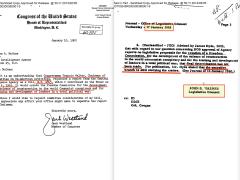
But the real news is the revelation that Eddie Shalev had previously been in the Israeli military. The file states, “Mr. Shalev served in the Israeli Defense Forces in a paratroop regiment. He was a jumpmaster on a Boeing C-130. Mr. Shalev moved to the Gaithersburg area in April 2001 and was sponsored for employment by Congressional Air Charters … [which] has subsequently gone out of business.”
The memorandum raises a number of disturbing questions. Consider, for example, the staffer’s choice of words in describing Shalev’s employment. What did Quinn John Tamm mean when he wrote that Shalev “was sponsored for employment”? The same curious wording can be found in a subsequent court document, which indicates that although Congressional Air Charters agreed in March 2001 to “sponsor and employ” Eddie Shalev as a test pilot, Shalev did not actually show up for work until August 2001, shortly before his test flight with Hani Hanjour.42 Are we to believe this was a mere coincidence? Had the Commission bothered to investigate Congressional Air Charters, they would have learned that its owner, Monty Lilley, was a convicted felon. In 1992, a Gaithersburg, Maryland court sentenced Lilley to 30 months in prison and ordered him to pay $3 million in restitution, after finding him guilty of embezzling $3.1 million from a pension fund.43 We are indebted to 9/11 researcher Chris Bollyn for his diligence in recently bringing this important information to light.
Real people have addresses. But the whereabouts of Eddie Shalev has been unknown for years. As reported by David Griffin, a 2007 search of the national telephone directory, plus Google searches by research librarian Elizabeth Woodworth, turned up no trace of Shalev. A LexisNexis search by Matthew Everett also came up dry.
Not satisfied, I conducted my own searches, and succeeded in turning up two possible addresses for an “Eddy Shalev” in the Gaithersburg-Rockville, Maryland area. But the leads went nowhere, and his phone number was no longer in service. Court documents indicate that Shalev attempted to obtain permanent legal residence status in the US after his visa expired in July 2004. However, the courts ruled against him in 2007, suggesting that Shalev eventually returned to Israel.46 Further searches turned up an Israeli businessman with the same name. According to his on-line bio, Eddy Shalev of Herzliya Pituach, Israel has had a long career as an equity investor in various emerging growth and technology companies.47 The bio describes Shalev as “one of the best known figures in the Israeli business community.” This Eddy Shalev holds a Masters Degree in information Systems and B.A. in statistics, both from Tel Aviv University, and mentions that he worked for a time in the computer center at the Israeli Ministry of Defense. However, the bio says nothing about flying or military service. This Eddy Shalev appears to be a different individual. Did a spook borrow his name? - De Flight Data Recorder van U93: ook verdacht:
Moreover, there is reason to be suspicious of United 93’s recovered Flight Data Recorder (FDR). Although the commercial plane supposedly disintegrated when it impacted the ground nose down at a velocity of ~500 mph, surprisingly, the black box in the tail of the aircraft failed to register a sudden longitudinal deceleration at the moment of impact.19 This is in sharp contrast with American Airlines Flight 77, presumably the plane that crashed into the west wing of the Pentagon. The black box from the tail of AA77 was likewise recovered, and it registered the maximum deceleration value possible, exactly what one would expect of a high speed crash. Nor did United 93’s Cockpit Voice Recorder (CVR) record the loud sound of impact, as might be expected as the nose of the plane hit the ground.
When family members of the deceased passengers were later allowed to listen to the recovered CVR tape, they reported hearing the sounds of an on-board struggle, then “a rushing sound” at 10:03 a.m., before the tape fell silent.
In sum, the FDR-based evidence for a high-speed nose-down crash is less persuasive than we have been led to believe. The anomalies with the FDR and CVR raise the possibility that United 93 began to disintegrate before it hit the ground, perhaps due to one or more explosions. This might also explain the absence of a seismic signal at 10:03 a.m., though I hasten to add, it is also possible and perhaps even more likely that the signal strength of the crash was simply too weak to be detected. - Meer over U93:
Although these two, and a number of other local residents, reportedly observed the final moments of United 93, unfortunately, to this day we do not have a clear composite picture of the crash based on the testimony of eyewitnesses, because even though the FBI issued a plea for witnesses to come forward, and even posted a contact phone number,25 there is no evidence that the FBI cross-checked the various accounts, even though this is standard in police work. To date, no FBI document has surfaced indicating the agency did this important work.
On September 24, 2001 FBI spokesman Bill Crowley announced that his investigation was complete and that 95% of the plane had been recovered, an obvious bit of official hyperbole. Crowley also mentioned that the largest piece of wreckage was a seven-foot-long shred of fuselage skin.35 The FBI later posted a photo of this piece of debris, but never indicated where they found it.36 Most pieces, however, were much smaller. Wallace “Wally” Miller, the Somerset County coroner, told the press that most of the recovered debris was thumbnail size, “no bigger than a pop rivet holding two pieces of aluminum.” No intact bodies were recovered, but Miller confirmed that he had been able to identify 12 out of 44 victims, based on DNA from human remains.
Multiple radar towers tracked United 93 continuously from the moment the plane departed Newark International Airport, and the radar track ends about three miles north of Shanksville. Also, the Cleveland ATC tapes were made freely available on the Internet. Anyone may review the record and follow the air traffic controllers in “real time” as they grappled with an unprecedented midair disaster. The radar data and the ATC tapes are mutually corroborative. Taken together, they show conclusively that United 93 went down north of Shanksville.
United 93’s suspect FDR and CVR, however, and the unusual crash site, especially the very wide dispersal of mostly tiny pieces of debris across the Pennsylvania countryside, taken together, suggest that the flight may have been brought down by a mid-air explosion or multiple explosions. A mid-air explosion might also explain why an investigation authorized by the Pennsylvania Department of Environmental Protection found no traces of jet fuel contamination at the site.48 United 93 reportedly had 37,500 pounds of fuel remaining on board as it approached Shanksville.49 Returning now to the controversy over the crash time...
Susan McElwain’s account would be easy to dismiss if it stood alone. But it does not stand alone. Several local residents reportedly heard the distinctive sound of a missile. According to the Boston Globe, one resident, “Joe Wilt, 63, said he heard a whistling like a missile, then a loud boom as he stood in the doorway of his Shanksville home across the road from the alleged crash site. Although his view was blocked by trees, he said he saw a fireball rise 800 feet into the air, then give way to black smoke.”55 Barry Lighty, mayor of the nearby xommunity of Indian Lake, also reported hearing a missile. He said it flew over his house.56 Chris Smith, a groundskeeper at the Indian Lake golf course, also heard a “very loud screeching sound” as something passed over. Moments later, he heard a huge explosion.57 And Ernie Stull, Mayor of Shanksville, told the Philadelphia Daily News that he personally knew of two local residents who claimed they heard a missile.58 A missile impact and explosion might account for the otherwise unexplained seismic signal at 10:06 a.m.
Near the end, for some reason that has never been explained, United 93’s transponder came back on, and it continued transmitting until the aircraft dropped below radar.64 Assuming there was a contingency plan to deploy a missile, a likely answer is quite simple. The perpetrators needed United 93’s altitude and flight speed to move the fighter into position. Once again, I must remind the reader: this is speculation. Whoever made the decision to obtain this “real time” information by turning United 93’s transponder back on, probably via remote access, was running a serious risk of exposure, and this suggests a degree of urgency, even desperation. I would add, however, that another 9/11 researcher, Rowland Morgan, author of a 2006 book about United 93, takes a different view of it. Morgan disputes the contingency plan hypothesis and believes that the only improvising occurred after the crash.65 Morgan thinks the plan from the beginning was to take down United 93, pretty much as it happened. - Nog iets over de interceptors:
As indicated, the F-15s from Langley AFB were airborne by roughly 9:30 a.m. but failed to reach Washington until 10 a.m. The pilots were delayed after being sent on three consecutive wild goose chases, a fact so embarrassing to the US military that for years the Pentagon covered up the actual flight path of the Langley fighters. The 9/11 Commission mentioned the first and second wild goose chases in its final report,6 published in 2004, but perpetuated the cover-up regarding the third.
An FBI official in Washington told CBS he had received this information from the Federal Aviation Administration (FAA). CBS also cited un-named “FBI and terrorism experts” who pointed out the historic and symbolic significance of the date and the presumed target, noting that Camp David is the presidential retreat where, on September 11, 1978, Israeli Prime Minister Menachem Begin and Egyptian President Anwar Sadat signed the historic Camp David Peace Accords.